Panelized Security Systems
WELDED WIRE PANEL SECURITY FENCING
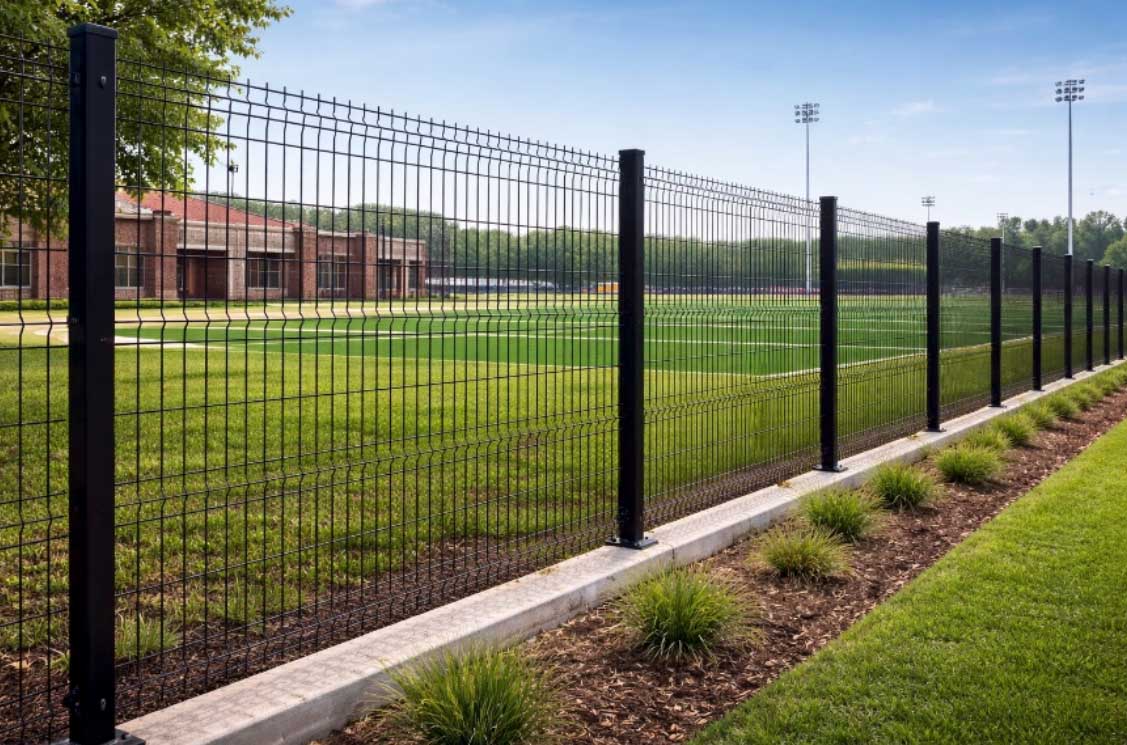
Rigid Panel Perimeter Systems — Structural, Modular, and Fully Documented for Public Sector Security Projects
CSI Division 32 31 26 — Wire Mesh Fencing | ASTM F2453 / ASTM A185 / ASTM A1064 Compliant | Serving General Contractors on Public Procurement Projects
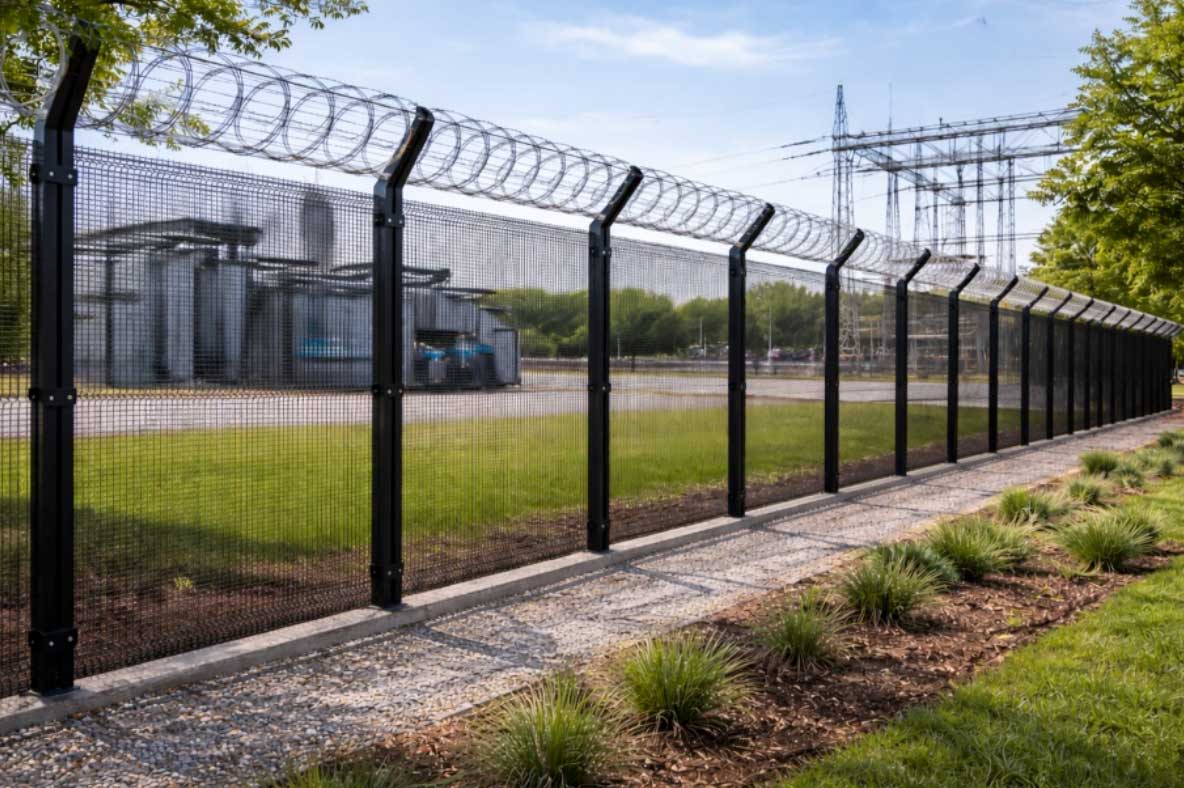
At Secure Public Fence, we install commercial and security-grade welded wire panel fence systems for public sector projects — correctional facilities, government campuses, transit and utility infrastructure, school secure zones, public safety facilities, and institutional perimeters. Welded wire panel fencing is the structural evolution beyond chain link: where chain link deforms under lateral load and allows fence fabric to be pushed or pulled apart at the knuckles, rigid welded wire panels hold their geometry under load, resist manual deformation, and maintain their security profile throughout the service life of the installation. We work exclusively as a fence subcontractor to General Contractors. Every welded wire panel installation we deliver is specified, documented, and installed to the commercial and security grade your public project requires — with a complete submittal and closeout package built for public procurement from day one.
System Overview — Welded Wire Panel vs. Chain Link: What the Spec Is Buying
The decision to specify welded wire panel over chain link is always a deliberate security and maintenance upgrade decision by the owner's design team. A PM reviewing these scopes needs to understand what the owner is paying for — and why the installation requirements are more demanding than standard chain link.
PERFORMANCE FACTOR | CHAIN LINK | WELDED WIRE PANEL |
|---|---|---|
Panel Rigidity | Flexible fabric — deforms under lateral load | Rigid welded panel — holds geometry under load, resists manual deformation |
Anti-Climb Profile | Flexible mesh allows grip and foothold | Rigid small-mesh panel denies stable hand/foot grip — cannot be pulled into a climbing surface |
Cutting Resistance | Chain link knuckles can be separated manually | Welded intersections resist manual separation — cutting requires sustained power tool effort |
Visual Deterrence | Open mesh — perceived as lower-security barrier | Solid rigid panel profile — communicates institutional security intent to potential intruders |
Vandalism Resistance | Fabric can be pushed, pulled, and deformed without cutting | Panel rigidity resists deformation — damage requires deliberate tool use |
Post Loading | Flexible fabric distributes load across post line | Rigid panels transfer concentrated loads to posts — post schedule and footing design are more critical |
Appearance Over Time | Fabric sags and deforms — appearance degrades | Rigid panels maintain appearance and geometry through full service life — no sagging or pull-apart |
Maintenance Profile | Periodic re-tensioning required — especially at gates | No re-tensioning — modular panels are replaced as individual units if damaged |
⚠ Post Schedule is More Critical on Panel Fencing Than on Chain Link Rigid welded wire panels transfer lateral wind and impact loads to posts as concentrated point loads — unlike chain link fabric, which distributes load continuously along the post line. Undersized posts on a welded wire panel installation will fail under wind load at a fraction of the force required to fail a properly designed chain link installation. We provide PE-stamped structural calculations for post embedment, footing design, and post schedule on every panel fence installation above 6 feet — and on any installation in a high-wind zone regardless of height. This is a submittal requirement that many fence subs skip, and the source of post failures that create owner liability on public projects. |
|---|
Technical Specifications
CSI DIVISION 32 31 26 — WIRE MESH FENCING | COMMERCIAL & SECURITY GRADE | PUBLIC SECTOR STANDARD
COMPONENT | SPECIFICATION |
|---|---|
CSI Reference | Division 32 31 26 — Wire Mesh Fencing |
Panel Standard | ASTM F2453 — Standard specification for metallic-coated steel welded wire fence panels |
Wire Standard | ASTM A1064 — Carbon steel wire; ASTM A185 — welded steel wire fabric |
Wire Diameter — Light | 3mm (approximately 8 ga) — light commercial, low-security perimeter definition |
Wire Diameter — Standard | 4mm (approximately 6 ga) — commercial security standard for public projects |
Wire Diameter — Heavy | 5mm or 6mm — high-security and institutional-grade applications |
Mesh Opening — Standard | 50mm x 200mm (2" x 8") — most common commercial panel opening; open visibility, moderate security |
Mesh Opening — Security | 50mm x 50mm (2" x 2") — high-security grade; reduced hand-grip, anti-climb profile |
Mesh Opening — Max Sec | 76.2mm x 12.5mm (358) — maximum security / anti-climb / anti-cut profile (see Anti-Climb page) |
Panel Height | 5', 6', 7', 8', 10', 12' standard — custom heights per structural engineering |
Panel Width | 6' to 10' standard — matched to post spacing to eliminate unsupported mid-span edges |
Panel Frame | Top and bottom horizontal frame rail — 1" x 2" rectangular tube standard; 1-1/2" x 2" for heights 8'+ |
Posts — Light | 2" OD Schedule 40 galvanized pipe — for fence heights up to 6' |
Posts — Standard | 3" OD Schedule 40 galvanized pipe — for heights 6' to 10'; standard on all public security applications |
Posts — Heavy | 4" OD Schedule 40 or Schedule 80 — for heights 10'+ or high-wind zones per structural engineering |
Post Embedment | Concrete-set per ACI 318 — minimum 36" for 6' fence; PE-stamped design for 8'+ and all high-wind installations |
Post Spacing | 8' to 10' O.C. — matched to panel width; reduced to 6' O.C. for security-rated applications per engineering |
Panel-to-Post Attachment | U-bolts with anti-tamper nuts (security grade) or standard hex nuts (commercial grade) — per security tier specification |
Coating — Standard | Class 3 hot-dip galvanized per ASTM A123 — minimum for all public project applications |
Coating — Premium | PVC-coated over Class 3 galvanized — ASTM F668 / RAL 6005 Green, RAL 9005 Black, RAL 8017 Brown |
Gate Hardware | Commercial-grade galvanized or stainless steel — anti-tamper hardware for security-rated gate installations |
Standards | ASTM F2453, A1064, A185, A123, F668, ACI 318 — CPTED guidelines — IBC wind load compliance |
Welded Wire Panel Product Families for Public Projects
UNDERSTANDING WHICH PANEL FAMILY THE SPEC IS REFERENCING IS THE FIRST STEP IN ACCURATE SCOPE AND BID PREPARATION
Public sector specifications reference welded wire panel fencing under several product family names. Each has a distinct mesh geometry, wire schedule, and performance profile. Confirming which family is specified — and which panel within that family meets the spec — is the scope review step that prevents material substitution disputes and submittal rejections.
PRODUCT FAMILY | DEFINING CHARACTERISTICS | TYPICAL PUBLIC SPEC LANGUAGE & APPLICATIONS |
|---|---|---|
V-Mesh / Welded V-Panel | Horizontal wires formed into V-shape between vertical wires — adds rigidity and anti-climb geometry without reducing mesh opening | Frequently specified as 'V-mesh panel fence' or 'welded V-panel' — perimeter security for transit yards, government campuses, school secure zones; balances open visibility with rigid anti-climb profile |
Flat Welded Wire Panel | Standard flat grid — horizontal and vertical wires welded at every intersection in a flat plane; most economical rigid panel option | Referenced as 'welded wire security panel,' 'rigid mesh panel,' or 'ASTM F2453 panel fence' — correctional minimum security, municipal compounds, utility perimeters, public works yards |
Palisade Panel (Steel Paling) | Vertical steel pales (flat or triple-pointed) welded to horizontal rails — solid steel picket panel system; highest impact resistance | Specified as 'palisade fencing' or 'steel paling fence' — high-security institutional perimeters, DOC facilities, government secure compounds requiring both visual deterrence and impact resistance |
Expanded Metal Panel | Steel sheet cut and expanded to diamond pattern — no welds; continuous monolithic structure; ASTM F2548 | Specified on federal and DOD-adjacent projects — perimeter security for military support facilities, federal courthouses, SCIF-adjacent perimeters; ASTM F2548 compliance documentation required |
Woven Tensioned Panel (CLD) | High-tensile steel wire woven under tension — European standard (EN 13200-6); highly flexible but maintains anti-climb profile | Appears on internationally influenced public project specs — transit authority projects with European design standards, federal projects with CPNI-referenced specifications |
Composite Panel (Mesh + Frame) | Welded wire infill within a structural steel frame — combines panel rigidity with frame strength for maximum impact resistance | Specified for maximum security applications — correctional close/maximum security, critical infrastructure, federal facility perimeters where panel impact resistance is a primary design criterion |
📐 How We Confirm the Correct Product Before Bid Day We review the spec section, referenced ASTM or EN standards, and any manufacturer-specific product references before submitting our bid. If the spec references a proprietary product by name, we confirm whether the spec allows 'or equal' substitution — and if so, we identify the qualifying equivalent and document the basis of substitution in our scope letter. If the spec is ambiguous between product families (e.g., 'rigid welded wire panel' without a specific mesh geometry), we issue an RFI before bid day with your superintendent's authorization — not after award. Scope ambiguity on panel fence products is a primary source of change orders on public projects. We eliminate it before bid submission. |
|---|
Mesh Opening & Wire Gauge Selection Guide
USE THIS TABLE DURING BID SCOPE REVIEW TO CONFIRM THE CORRECT PRODUCT TIER AGAINST THE SPECIFICATION
MESH OPENING | WIRE GAUGE | SECURITY TIER | TYPICAL PUBLIC APPLICATION |
|---|---|---|---|
50mm x 200mm (2" x 8") | 3mm (8 ga) | Commercial | School outdoor learning areas, park amenity perimeters, civic campus definition — open visibility, low security profile |
50mm x 200mm (2" x 8") | 4mm (6 ga) | Commercial Security | Transit station perimeters, municipal yards, public safety campus surrounds — standard public sector commercial grade |
50mm x 100mm (2" x 4") | 4mm (6 ga) | Medium Security | School secure zones, government facility perimeters, correctional minimum security — reduced opening for climb deterrence |
50mm x 50mm (2" x 2") | 4mm (6 ga) | High Security | Utility substations (NERC-CIP), correctional close security, federal adjacent perimeters — anti-climb profile with open visibility |
50mm x 50mm (2" x 2") | 5mm | Max Security | Critical infrastructure, DOC medium/close security, government secure compounds — maximum wire mass, weld strength |
76.2mm x 12.5mm (358) | 4mm to 6mm | Anti-Climb / Anti-Cut | See Anti-Climb & Anti-Cut Mesh Systems page — 358 profile is a specialized product family |
Gate Systems for Welded Wire Panel Installations
Gate systems on welded wire panel perimeters must be structurally matched to the panel system — the gate frame, hardware, and post schedule must be consistent with the security tier of the adjoining fence. A security-grade perimeter with a commercial-grade gate is a security gap, and one that owners' security consultants will flag during inspection.
GATE TYPE | STRUCTURAL REQUIREMENT | PUBLIC FACILITY APPLICATION |
|---|---|---|
Pedestrian Walk Gate | Welded panel infill in galvanized steel tube frame — hinges and latch rated to match fence security tier | School secure entries, government facility pedestrian access, public safety campus side access, utility enclosure man-gates |
Single Swing Vehicle Gate | Heavy-gauge welded panel infill — 3" or 4" gate post, commercial hinges, fork latch or drop bar rated to gate weight | Municipal yards, utility facility main entry, public works compound — manual or automated |
Dual Swing Vehicle Gate | Paired swing leaves — structural gate frame required; counterbalance per gate width; anti-sag diagonal brace standard | Transit maintenance yards, correctional facility vehicle sally ports, government secure compound main entry |
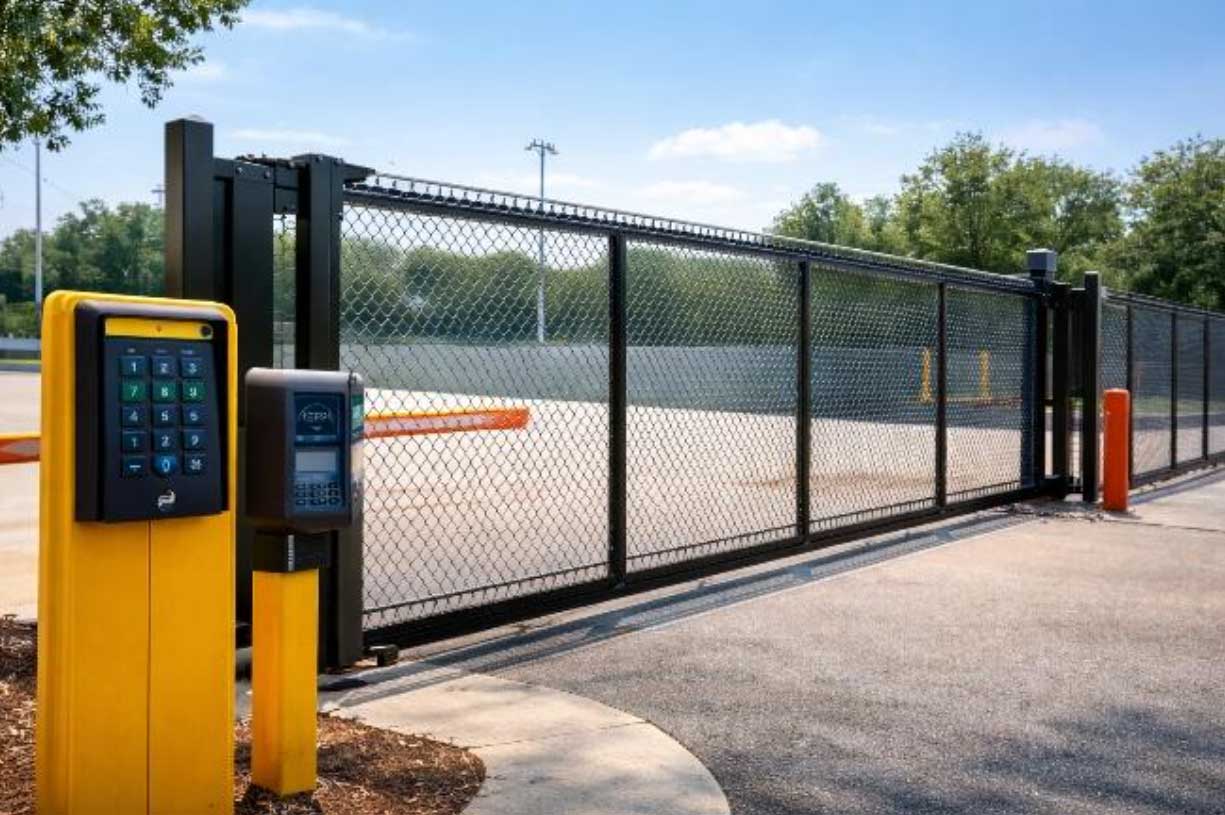
Cantilever Slide Gate | Structural cantilever frame — counterbalance ratio per gate width and weight; overhead roller post PE-stamped | High-frequency vehicle entry, bus/rail yards, secure facility entry where ground track is impractical — preferred for security applications due to no ground track vulnerability |
Bi-Parting Slide Gate | Two opposing cantilever leaves — structural engineering required; synchronized operator for automated applications | Wide-span secure entries, correctional vehicle entries, federal facility main access — space-efficient for wide openings |
Turnstile / Pedestrian Control | Full-height turnstile in welded panel frame — integrated with access control system | Transit stations, government campus controlled pedestrian entries, public safety facilities — restricts tailgating and unauthorized access |
⚙ Gate Weight & Operator Sizing — A Coordination Point That Creates RFIs Welded wire panel gates are significantly heavier than chain link gates of the same dimensions — the rigid frame and panel infill add substantial dead load that must be accounted for in hinge sizing, latch hardware selection, and gate operator motor specification. On automated gate systems, we provide the gate weight and dimensional data to your electrical sub and the gate operator vendor before equipment selection — preventing motor undersizing that leads to operator failure, warranty disputes, and owner callbacks. All gate hardware is specified and submitted for A&E review before fabrication. No field substitutions on security-grade gate hardware. |
|---|
Where Welded Wire Panel Security Fencing Gets Specified in Public Projects
Welded wire panel is specified when a public owner needs the security performance of a rigid system, the open visibility of a mesh profile, and a 20+ year service life with minimal maintenance. It is the system that bridges the gap between ornamental steel (architectural, visible) and anti-climb mesh (maximum security, institutional) — and it covers the widest range of public facility types of any security fence system.
FACILITY TYPE | TYPICAL WELDED WIRE PANEL SCOPE |
|---|---|
K-12 & Higher Education | Secure campus perimeter — commercial security grade; athletic field surround; HVAC and utility enclosures; portable classroom compound perimeters; controlled entry pedestrian gates. |
Correctional Facilities | Minimum to medium security perimeters — 50mm x 50mm, 4mm or 5mm, with rotary topper or barbed wire extension; secondary perimeter fencing; vehicle sally port gate systems. |
Transit Infrastructure | Rail and bus maintenance yard perimeters — commercial to medium security grade; utility enclosure surrounds; station back-of-house perimeters; access control gate systems. |
Water & Wastewater Utilities | Treatment plant perimeters, pump stations, reservoir surrounds — EPA-driven physical security; ASTM F2453 baseline; anti-tamper hardware on security-tier installations. |
Electrical Infrastructure | Substation perimeters — NERC CIP-006 physical security compliance; 50mm x 50mm, 4mm minimum; anti-tamper fixings; intrusion detection integration coordination. |
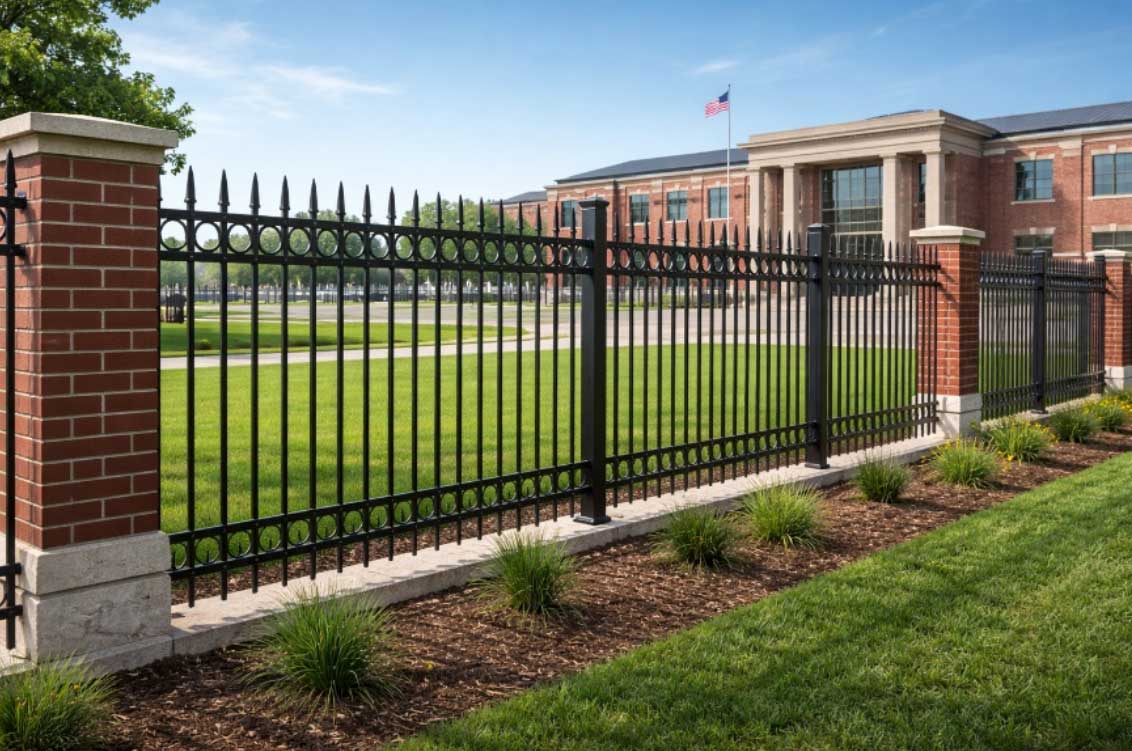
Government & Federal Campuses | Agency secure zones, law enforcement facilities, public safety campuses, emergency operations centers — commercial security to high-security tier per facility security plan. |
Military Support Facilities | Non-classified base support perimeters, contractor access zones, equipment storage compounds — ASTM F2453 compliance; anti-tamper hardware; coordinate with FSO requirements. |
Municipal & Public Works | Fleet maintenance yards, equipment storage, solid waste facilities, public works compounds — commercial grade, vehicle gate systems, durable low-maintenance profile. |
Healthcare & Institutional | Hospital campus perimeters, psychiatric facility secure grounds, behavioral health campus secure zones — medium security grade, anti-climb profile, anti-tamper hardware. |
Compliance & Documentation
CSI 32 31 26 | ORGANIZED TO YOUR PROJECT'S SPECIFICATION FORMAT — FIRST SUBMITTAL, NO RE-SUBMISSIONS
Welded wire panel submittals on public projects must document the panel system (wire gauge, mesh geometry, weld strength), the post system (pipe schedule, embedment, footing design), and the hardware schedule (attachment method, anti-tamper spec where required) — each as independent components. For security-tier projects, PE-stamped structural calculations and ASTM compliance letters are standard submittal requirements. We build the package right the first time.
Pre-Construction Submittals
| During Construction
Project Closeout Package
|
Installation on Active Public Sites
Welded wire panel installations on public security sites require the same rigor as anti-climb mesh projects — particularly regarding perimeter security continuity, post structural compliance, and hardware installation documentation. Our field crews are trained for the full scope of public sector security site conditions.
Post Embedment Quality Control Rigid panel systems transfer concentrated loads to posts. Every post embedment is documented — depth measurement, concrete placement method, and cure time before panel installation. We do not install panels on fresh concrete footings. Minimum cure time is 24 hours; 72 hours on projects with PE-specified curing requirements. Panel Alignment & Flatness Welded wire panels are rigid — once installed, misalignment cannot be corrected by tensioning as with chain link. We set all posts to a laser-established line before concrete placement, and verify panel flatness and alignment before anti-tamper hardware is torqued. Corrections after hardware installation require panel removal and re-installation. Perimeter Security Continuity On occupied correctional, government, or institutional sites, we develop and execute a Perimeter Security Continuity Plan before mobilization — documenting phasing sequence, maximum open-perimeter window, and temporary security bridging protocols in coordination with your superintendent and the owner's security officer. | Panel Handling & Site Staging Rigid panels require proper site staging to prevent deformation during storage and handling. We maintain panels in manufacturer's packaging until installation, stage panels on level ground with adequate support to prevent warping, and inspect every panel before installation. Deformed panels are rejected and replaced — not installed and patched. Gate Fabrication Coordination Security-grade gates in welded wire panel systems are frequently shop-fabricated to match the panel system's wire gauge and mesh geometry. We coordinate gate fabrication lead times — typically 3–5 weeks for security-grade welded panel gates — with your project schedule to avoid gate delivery delays that hold up perimeter completion. Davis-Bacon & Prevailing Wage Compliance All applicable projects executed in full prevailing wage compliance. Certified payroll records maintained and submitted on your required schedule. Personnel background screening initiated immediately upon award for facility-access-controlled sites. |
Warranty Coverage
All warranties provided in written form as part of the project closeout package, transferable to the project owner upon substantial completion. Extended warranty options available for premium coating specifications and high-security applications.
COVERAGE | DURATION |
|---|---|
Workmanship (Labor) | 2 Years |
Panel Structural Integrity — Weld Strength | 10 Years per ASTM F2453 weld shear standard |
Class 3 Galvanized Coating — Panels & Posts | 10 Years Corrosion Protection |
PVC Coating over Galvanized | 5 Years Color Retention & Adhesion |
Post Structural Performance | 5 Years — Embedment and Structural Compliance (footing log provided) |
Anti-Tamper Hardware | 5 Years — Mechanical Function & Corrosion |
Gate Hardware — Manual | 2 Years Parts & Labor |
Gate Operators — Automated | 1 Year Parts & Labor + Manufacturer Warranty (typically 3–5 years) |
Working With Us — Subcontract Process
Welded wire panel projects require more pre-construction coordination than chain link — particularly around post structural design, gate fabrication lead times, and security continuity planning on occupied sites. The earlier you bring us in, the more value we add to your schedule.
01 | BID PHASE Send us the fence spec section (CSI 32 31 26), site plan, panel product reference (if specified), and bid date. We confirm product family, mesh geometry, wire gauge, security tier, and post schedule from the spec — and return a complete scope letter and hard bid within 3 business days. We flag product substitution requirements and spec ambiguities before bid day. |
02 | AWARD & PRE-CONSTRUCTION Upon award, we execute your subcontract, provide COI within 24 hours, and immediately initiate: PE engineer engagement for structural calculations, gate fabrication order placement, and personnel screening for facility-access-controlled sites. Gate lead times are confirmed on day one. |
03 | SUBMITTALS Full submittal package delivered within 15 business days of NTP — ASTM F2453 compliance documentation, mill certs, PE-stamped structural calculations, shop drawings, hardware schedule, and Perimeter Security Continuity Plan where required. Organized to CSI 32 31 26 and the project's security specification format. |
04 | INSTALLATION Post embedment documented per post with depth logs and concrete placement records. Panel alignment verified by laser line before hardware installation. Anti-tamper torque logs maintained in real time on security-tier projects. Gate installation coordinated with your electrical sub for operator integration. |
05 | CLOSEOUT Complete closeout package — as-builts, ASTM compliance documentation, PE footing logs, warranties, anti-tamper key chain-of-custody (where applicable), maintenance guide, gate O&M manuals, lien releases — delivered within 5 business days of substantial completion. |
Frequently Asked Questions — For Project Managers
Q: The spec says 'rigid welded wire panel fence' but doesn't specify a product name — how do we know which product to bid? A: This is the most common scope ambiguity on welded wire panel projects. We review the spec section for the controlling parameters: mesh opening size, wire gauge, ASTM reference (F2453 baseline vs. a specific product standard), and any security performance rating. From those parameters, we identify the qualifying product family and confirm it with the A&E team via RFI before bid day. Your scope letter documents the specific product, mesh geometry, and wire schedule we are pricing — so there are no material substitution disputes after award. |
Q: Why do welded wire panel gates take longer to fabricate than chain link gates? A: Chain link gates use off-the-shelf frame components and field-cut fabric — assembly is fast. Security-grade welded wire panel gates require shop fabrication of the gate frame and infill panel to match the specified mesh geometry, wire gauge, and frame section — components that are not typically stocked in standard fabrication inventories. Lead time for security-grade panel gates is typically 3–5 weeks from approved shop drawings. We flag this on bid day and initiate the fabrication order immediately upon award so gate delivery does not hold up perimeter completion. |
Q: Does welded wire panel fencing require PE-stamped structural calculations? A: Yes — on any installation above 6 feet, in any high-wind zone, or where the specification explicitly requires engineered drawings. Rigid panels transfer concentrated lateral loads to posts in a fundamentally different way than chain link fabric. Post size, wall thickness, embedment depth, and footing diameter must be calculated, not estimated. We engage a licensed PE for structural calculations on every qualifying project and include the stamped drawings in the submittal package. This is a standard deliverable, not an add-on. |
Q: Can welded wire panel systems be integrated with access control and CCTV? A: Yes, and early coordination is critical. We provide conduit stub-out locations, camera mounting bracket structural details, card reader post mounting specifications, and gate operator structural requirements to your electrical sub and security integrator before rough-in. On projects with perimeter intrusion detection, we coordinate sensor cable routing paths within the panel system. We do not install electrical or security electronics — we ensure the civil and structural scope supports their installation without modifications. |
Q: How does a damaged panel get replaced in the field after project closeout? A: Modular panel replacement is one of the maintenance advantages of welded wire panel over chain link — a damaged panel can be removed and replaced as a single unit without affecting adjacent sections. Our closeout package includes a maintenance guide that documents the panel removal procedure, the anti-tamper key requirement for hardware removal (on security-tier projects), and the panel specification for replacement ordering. Owners' facility managers can manage routine panel replacement without a fence contractor — which is a lifecycle cost advantage we communicate to the owner's project team during closeout. |
Download Our Welded Wire Panel Security Fencing Catalog
Our Welded Wire Panel Catalog includes the full product family reference guide, mesh opening and wire gauge selection matrix, panel-vs-chain link comparison, post schedule reference, gate system guide, coating specifications, PE-stamped detail drawings, and submittal-ready product data sheets — everything your estimating and project management team needs to scope, bid, and execute welded wire panel projects on public sector construction.
📄 Welded Wire Panel Security Fencing Catalog Includes:
| 📋 Capabilities Statement Includes:
|

FENCING SYSTEMS