Architectural & Perimeter Systems
Hog Wire Fence
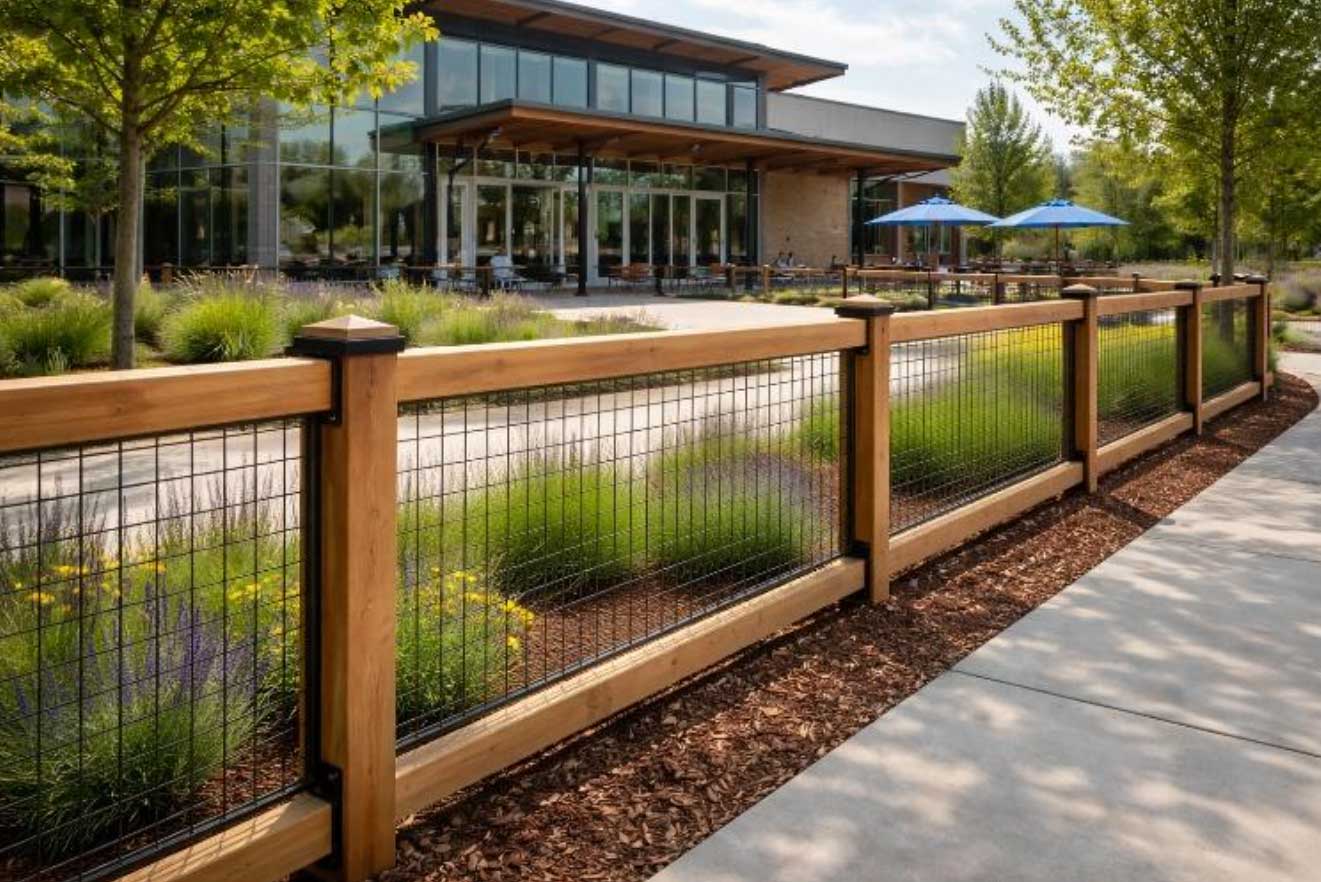
Welded Wire Panel Systems for Parks, Natural Areas & Public Amenity Spaces — Built to Spec, Environmentally Compliant, Delivered on Schedule
CSI Division 32 31 29 — Welded Wire Fence | ASTM A185 / ASTM A82 Compliant | Serving General Contractors on Public Procurement Projects
At Secure Public Fence, we install commercial-grade hog wire fence systems for public sector projects — regional and community parks, nature preserves, trail corridors, riparian buffer zones, public botanical gardens, school outdoor learning environments, and civic amenity spaces. Hog wire — welded wire panel infill in a structural wood or steel post-and-rail frame — is the specification of choice when public owners require open visibility, low visual impact, long service life, and compatibility with naturalized or sensitive environments. We work exclusively as a fence subcontractor to General Contractors. Every hog wire installation we deliver is specified and documented to the commercial grade your public project requires — correct wire gauge, correct weld specification, correct post schedule, correct coating — with a complete submittal and closeout package built for public procurement.
System Overview — What Is Hog Wire Fence?
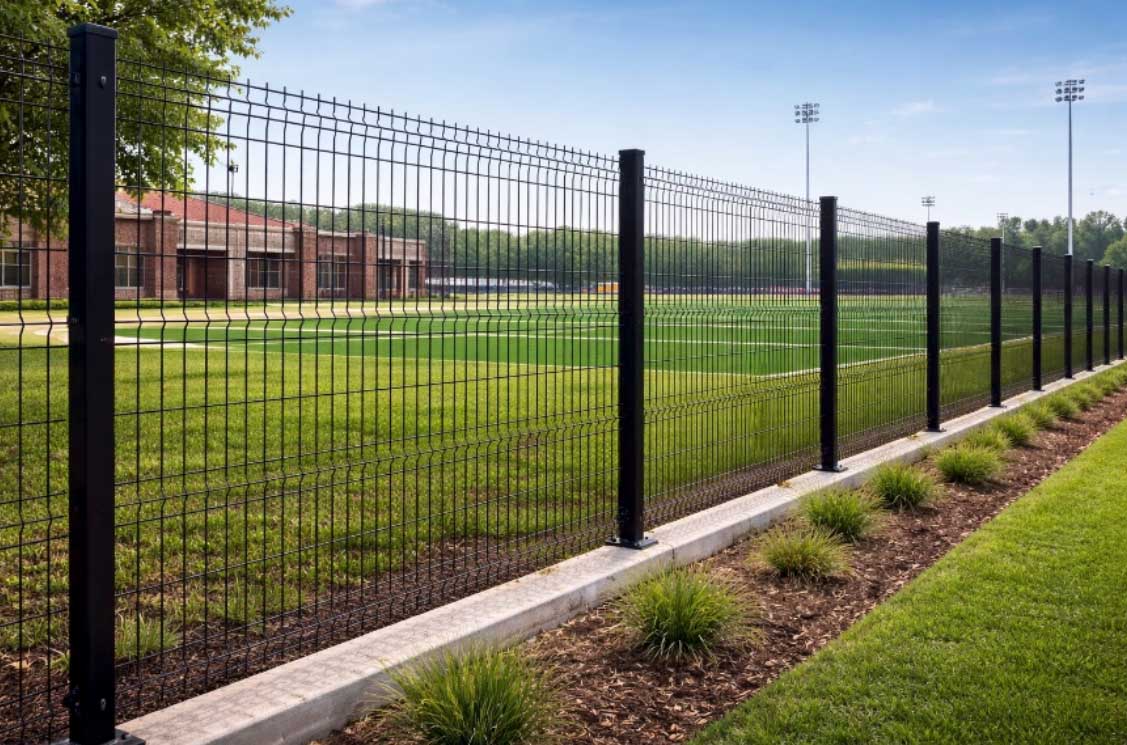
Hog wire fence — also referenced in public specifications as welded wire fence, wire mesh panel fence, or cattle panel fence — consists of a grid of steel wires welded at each intersection to form rigid panels, installed within a structural post-and-rail framework. The term 'hog wire' historically refers to the 4" x 4" or 4" x 2" welded wire grid pattern originally developed for livestock containment, now widely adopted in landscape architecture and public facility design for its clean, minimalist profile.
In public sector specifications, the system is typically defined by three components: the welded wire mesh panel (wire gauge, grid opening, and coating), the post system (wood species and grade, or steel pipe schedule), and the rail system (structural dimensional lumber or steel tube). Each component is independently specified and must be documented separately in submittals.
📐 How Public Specs Reference This System Specifications may call this system by different names depending on the design team: 'welded wire fence,' 'wire mesh panel fence,' 'hog wire panel fence,' 'stock panel fence,' or 'cattle panel fence.' The controlling CSI section is 32 31 29 — Welded Wire Fence. Some specs incorporate it into 32 31 13 (Chain Link) or 32 31 16 (Wood Fencing) depending on the primary structural material. We review the spec language with you before bid day and confirm the correct scope interpretation. If the spec references multiple sections for a single fence system, we flag it and help draft the clarifying RFI. |
|---|
Why Hog Wire for Public Projects?
Public owners specify hog wire fence when the project requires a functional barrier that does not compete visually with the natural or designed landscape. It is the material of choice for parks departments, land conservancies, environmental agencies, and campus planners who need perimeter definition and visitor management without the institutional appearance of chain link or the opacity of wood privacy panels.
Open Visibility & CPTED Compatibility The open grid profile maintains sight lines through the fence line — a requirement in public park and trail specifications written to Crime Prevention Through Environmental Design (CPTED) standards. Public agencies increasingly prohibit solid or opaque fencing in park and open space zones precisely to maintain natural surveillance. Low Visual Impact in Sensitive Landscapes Hog wire's recessive profile and dark coating options (black, dark green, brown) allow it to visually recede into naturalized plantings, riparian corridors, and preservation areas where chain link would be visually disruptive and wood privacy panels would block ecosystem connectivity. Environmental Compatibility The open mesh structure allows air movement, water flow, and small wildlife passage — critical in projects near wetlands, riparian buffers, or habitat zones where solid barriers are prohibited by environmental permits or agency conditions of approval. We can provide documentation of mesh opening size for environmental permit compliance. | Long Service Life, Low Maintenance Welded wire panels with Class 3 galvanized or PVC coating over galvanized steel provide 20+ year service life with minimal maintenance — a key factor in public owner lifecycle cost analysis. Combined with naturally durable post materials (Western Red Cedar or pressure-treated lumber), the full system is engineered for low-maintenance public ownership. Design Flexibility Hog wire systems are available in multiple grid patterns (4"x4", 4"x2", 2"x4", custom), panel heights, and frame configurations (wood post-and-rail, steel post-and-rail, or hybrid). This flexibility allows the system to satisfy both the structural requirements of the specification and the aesthetic requirements of the design review process. LEED & Sustainability Documentation Steel welded wire panels contain significant recycled content and are themselves recyclable at end of life. When paired with FSC-certified lumber posts and rails, the system can contribute to LEED Materials & Resources credits. Recycled content and FSC documentation available upon request for LEED-tracked public projects. |
Technical Specifications
CSI DIVISION 32 31 29 — WELDED WIRE FENCE | COMMERCIAL GRADE | PUBLIC SECTOR STANDARD
COMPONENT | SPECIFICATION |
|---|---|
CSI Reference | Division 32 31 29 — Welded Wire Fence |
Mesh Standard | ASTM A185 (welded steel wire fabric) / ASTM A82 (plain steel wire for mesh) |
Wire Gauge — Standard | 9 ga (0.148") horizontal and vertical wires — commercial grade minimum |
Wire Gauge — Heavy | 6 ga (0.192") for high-traffic, large animal containment, or per owner specification |
Grid Openings | 4" x 4" standard (most common in public parks/trails); 4" x 2" for small animal containment; 2" x 4" horizontal emphasis; custom per spec |
Panel Height | 36", 42", 48", 60", 72" standard — custom heights per design |
Wire Coating | Class 3 hot-dip galvanized (ASTM A153) standard — PVC-coated over galvanized (Black, Dark Green, Brown) where specified for visual recessive profile |
Wood Posts | 4x4 or 6x6 Western Red Cedar (#1 or Better) or pressure-treated Southern Yellow Pine (UC4B ground contact rated) — per spec and environmental conditions |
Steel Posts | 2" OD Schedule 40 galvanized pipe — powder-coated finish available for color-matched installations |
Post Spacing | 6' to 8' O.C. standard — adjusted per panel width, post species, and engineering |
Post Embedment | Minimum 1/3 post height in ground — concrete-set per local frost line depth; helical anchors available for sensitive soils or no-dig requirements |
Rails | 2x4 or 2x6 Western Red Cedar or pressure-treated lumber — top and bottom rail standard; mid-rail for heights 60"+ or per spec |
Panel Attachment | U-staples (wood frame) or wire clips/tension wire (steel frame) — spacing per commercial standard at 12" O.C. max |
Gate Hardware | Commercial-grade stainless steel or hot-dip galvanized hinges and latches — sized per gate width and public use frequency |
Standards | ASTM A185, A82, A153, F1083 — CPTED guidelines — LEED recycled content documentation available |
🌿 Wood Post Species Selection — What Matters on Public Projects Western Red Cedar: Preferred for projects in naturalized areas, parks, and environmentally sensitive zones. No chemical treatment required — natural oil resistance to decay, insects, and moisture. FSC-certified supply available for LEED projects. Pressure-Treated (UC4B): Required by some public specs for ground-contact posts in high-moisture environments, coastal zones, or areas with aggressive soil conditions. AWPA UC4B rating for ground contact. Chemical type (ACQ, CA, MCQ) documented in submittals — important for projects near water or with environmental permit conditions restricting treatment chemicals. Steel Post Option: Preferred for high-traffic public areas, vandal-prone locations, or projects requiring powder-coat color matching. No rot or insect risk. Full documentation of coating system and post schedule provided. |
|---|
Configuration Options for Public Facility Applications
ALL CONFIGURATIONS AVAILABLE WITH WOOD OR STEEL POST SYSTEMS — SHOP DRAWINGS PROVIDED FOR EVERY OPTION
CONFIGURATION | GRID / HEIGHT | PRIMARY PUBLIC APPLICATIONS |
|---|---|---|
Standard Park Fence | 4"x4" grid, 42" or 48" height | Trail corridor delineation, park perimeters, natural area buffers, dog park enclosures — most common public park specification |
Low Visibility / Recessive | 4"x4" grid, 36" height, PVC black coat | Habitat restoration areas, riparian buffers, botanical gardens, scenic corridors — maximum visual recessive profile |
Small Animal Containment | 4"x2" grid, 48" to 60" height | Dog parks (small breed zones), wildlife rehabilitation enclosures, school garden protection, sensitive habitat exclusion areas |
Heavy-Duty Park Fence | 6 ga, 4"x4" grid, 60" height | High-use park perimeters, large animal exclusion, urban park edges adjacent to pedestrian/vehicle traffic zones |
Tall Perimeter / Security | 9 ga, 4"x4" grid, 60" to 72" height | School outdoor learning areas, park maintenance yards, utility screening — where open visibility is required but height provides access deterrent |
Horizontal Rail Emphasis | 2"x4" grid (horizontal), 42" to 48" | Contemporary civic design, streetscape parkways, design-board-specified public spaces where modern aesthetic is required |
Post-and-Cable Hybrid | 4"x4" mesh + horizontal cable rail accent | High-design civic spaces, waterfront parks, plazas — where hog wire mesh is combined with structural cable for architectural finish |
Environmental & Permit Compliance — A Critical Factor in Public Projects
Hog wire fence is frequently specified on public projects that involve environmentally regulated areas — riparian corridors, wetland buffers, habitat zones, and coastal or floodplain-adjacent sites. These projects carry permit conditions from resource agencies (Army Corps of Engineers, state fish and wildlife, EPA) that directly affect fence design, installation method, and documentation requirements. Most fence contractors have no experience with this — we do.
Riparian & Wetland Buffer Zones Fence installations within or adjacent to riparian setbacks and wetland buffers are subject to agency-specific conditions that typically restrict: post installation method (no concrete in streambed setback), post treatment chemicals (ACQ and copper-based treatments restricted near water), mesh opening size (minimum opening for fish and wildlife passage), and grading disturbance limits. We review agency permit conditions before mobilization, select compliant materials, and document all environmental compliance measures in the field record — protecting your project from agency stop-work orders and owner liability. No-Dig Installation Options For projects in sensitive soils, restored native plant areas, or locations where permit conditions restrict soil disturbance, we offer helical anchor post installation — a low-vibration, no-excavation method that minimizes ground disturbance while achieving required embedment depth. Helical anchor installations are documented with torque logs for engineer verification. | Wildlife Passage Documentation Environmental agencies increasingly require documentation that fence mesh openings are sized to allow passage of specified wildlife species. For hog wire fences in habitat zones, we provide written confirmation of mesh opening size and can source panels with wildlife-passage-compliant specifications when required by permit conditions. LEED & Green Building Documentation For LEED-tracked public projects, we provide recycled content percentage documentation for steel mesh panels, FSC chain-of-custody certification for wood posts and rails (when FSC supply is specified), and regional materials sourcing documentation as required by the project's LEED credit goals. Invasive Species Protocols Some public land management agencies require active invasive species management protocols during fence construction in natural areas — particularly for projects crossing known invasive plant corridors. We implement agency-required equipment cleaning and staging protocols as a standard part of our installation plan for natural area projects. |
Where Hog Wire Gets Specified in Public Projects
Hog wire is the preferred fence system for public owners who manage natural landscapes, recreation corridors, and civic amenity spaces. Understanding the specific scope that belongs in each facility type is how we stay ahead of scope gaps and spec ambiguities on bid day.
FACILITY TYPE | TYPICAL HOG WIRE FENCE SCOPE |
|---|---|
Regional & Community Parks | Trail corridor delineation, natural area buffers, habitat exclusion zones, maintenance yard perimeters, dog park enclosures — most common hog wire public application. |
Nature Preserves & Open Space | Perimeter definition for habitat restoration zones, riparian buffer fencing, invasive plant exclusion barriers, interpretive area separation — environmental compliance documentation typically required. |
School Outdoor Learning Areas | Garden enclosures, outdoor classroom perimeters, native plant demonstration areas, small animal habitat exhibits — low visual impact, child-safe mesh sizing. |
Public Botanical Gardens | Plant collection boundary fencing, restoration area exclusion, pedestrian flow management — design-board-specified profiles and color-matched coatings. |
Trail Corridors (Linear Parks) | Continuous trail edge delineation, private property interface fencing, sensitive habitat separation along multi-use trail systems — long linear runs with minimal footprint. |
Civic Plazas & Streetscapes | Contemporary hog wire panels in steel post-and-rail frame for high-design public spaces — horizontal or vertical grid, custom heights, powder-coat color-matched to project palette. |
Athletic & Recreation Complexes | Practice area separation, facility perimeter screening, equipment storage enclosures — heavy-duty 6 ga panels for high-use and vandal-prone zones. |
Affordable Housing / Mixed-Use | Courtyard and amenity space perimeters, community garden enclosures, outdoor seating area definition — frequently specified in community design standards for publicly funded residential developments. |
Compliance & Documentation
CSI 32 31 29 | ORGANIZED TO YOUR PROJECT'S SPECIFICATION FORMAT — FIRST SUBMITTAL, NO RE-SUBMISSIONS
Hog wire fence submittals on public projects require documentation for three independent components — the wire mesh panel, the post system, and the rail system — each with its own material standard. On environmentally sensitive sites, additional agency compliance documentation is required beyond the standard submittal package. We prepare all of it.
Pre-Construction Submittals
| During Construction
Project Closeout Package
|
Installation on Active Public Sites
Public park, trail, and natural area projects present unique field conditions that most fence contractors are not equipped to navigate. Our crews are trained for the full range of public sector natural area site conditions.
Active Park & Trail Protocols For installations in operating parks and along active trail corridors, we implement public safety perimeters, directional signage for trail re-routing, and daily site restoration to keep park operations uninterrupted. Open excavations are secured and signed at end of each work day without exception. Sensitive Natural Area Protocols For projects in habitat restoration zones, riparian corridors, or agency-permitted natural areas, we implement equipment staging protocols, vehicle access route restrictions, and equipment cleaning procedures as required by permit conditions or owner standards. Underground Utility Coordination All post locations confirmed with 811/Dig Safe. On park and natural area projects, we also coordinate with parks maintenance staff to identify unmarked irrigation lines and utility corridors that are frequently not reflected in as-built drawings. | Phased Installation for Continuous Access Trail corridor and park perimeter projects are frequently phased to maintain public access throughout construction. We coordinate installation phases with your site superintendent and the park operations team to minimize access disruption and maintain scheduled park programming. Seasonal & Environmental Windows Some public natural area projects have installation windows restricted by environmental permits or agency conditions — bird nesting seasons, fish migration windows, or wetland work restrictions. We review permit conditions before scheduling and build environmental windows into the installation plan from the start. Davis-Bacon & Prevailing Wage Compliance All applicable projects executed in full prevailing wage compliance. Certified payroll records maintained and submitted on your required schedule — no compliance exposure on your project. |
Warranty Coverage
All warranties provided in written form as part of the project closeout package, transferable to the project owner upon substantial completion. Extended warranty options available for projects with premium material specifications.
COVERAGE | DURATION |
|---|---|
Workmanship (Labor) | 2 Years |
Welded Wire Mesh — Class 3 Galvanized | 10 Years Corrosion Protection |
Welded Wire Mesh — PVC-Coated over Galvanized | 5 Years Coating Adhesion & Color Retention |
Western Red Cedar Posts & Rails | 5 Years — Natural Decay & Structural Performance |
Pressure-Treated Posts (UC4B) | 10 Years — Ground Contact Decay Protection per AWPA |
Steel Posts — Galvanized | 10 Years Corrosion Protection |
Gate Hardware — Manual | 2 Years Parts & Labor |
Helical Anchor Embedment | 5 Years — Structural Performance (torque log provided) |
📋 Maintenance Schedule Note for Owner Turnover Cedar posts and rails benefit from periodic stain or sealant application every 3–5 years to maximize service life — particularly in high-UV or high-moisture environments. Our closeout package includes an owner-facing maintenance guide that documents the recommended treatment schedule, compatible product specifications, and inspection checklist. This documentation is frequently requested by parks departments and facility managers during the project closeout process and is included as a standard deliverable on all hog wire projects. |
Working With Us — Subcontract Process
Natural area and park projects often have longer environmental review and permit processes upstream of construction — which means fence scopes can mobilize quickly once the NTP arrives. We are set up to move fast when your schedule requires it.
01 | BID PHASE Send us the fence spec section (CSI 32 31 29 or equivalent), site plan with fence layout, any agency permit conditions affecting fence scope, and bid date. We confirm material specification, post type, grid opening, and coating — and return a complete scope letter and hard bid within 3 business days. We flag permit-related scope items that affect pricing before bid day. |
02 | AWARD & EXECUTION Upon award, we execute your subcontract, provide COI within 24 hours, and submit our full submittal package within 10 business days of NTP. For permit-conditioned sites, we review agency conditions with your superintendent before mobilization. |
03 | SUBMITTALS Full submittal package delivered within 10 business days of NTP — mesh mill certs, lumber grade/treatment docs, FSC and LEED documentation where required, shop drawings, and environmental compliance documentation for permit-conditioned sites. |
04 | SCHEDULING We provide a detailed installation schedule coordinated with your site superintendent and park operations team. Environmental windows, trail access requirements, and seasonal restrictions are built into the schedule from day one. |
05 | CLOSEOUT Complete closeout package — as-builts, warranties, LEED documentation, environmental compliance summary, maintenance guide, lien releases — delivered within 5 business days of substantial completion. |
Frequently Asked Questions — For Project Managers
Q: The spec says 'welded wire fence' — is that the same as hog wire? A: Yes — 'welded wire fence,' 'hog wire fence,' 'wire mesh panel fence,' and 'stock panel fence' all refer to the same system: welded wire grid panels in a post-and-rail frame. The controlling CSI section is 32 31 29. The key variables to confirm from the spec are wire gauge, grid opening size, panel height, post material (wood species/treatment or steel), and coating type. We review all of these with you before bid day so your scope letter and price reflect exactly what the spec requires. |
Q: The project is in a riparian buffer zone — are there special requirements? A: Yes, and this is where most fence subs create problems for GCs on park and natural area projects. Riparian buffer installations typically have agency permit conditions restricting post treatment chemicals (copper-based ACQ is frequently restricted near water), requiring helical or driven post installation instead of concrete footings, and specifying minimum mesh opening sizes for wildlife passage. We review the permit conditions with you before bid and mobilization, select compliant materials, and document all environmental compliance measures in the field record. |
Q: Can you match the hog wire style to an existing fence or a specific design aesthetic? A: Yes. We carry multiple grid patterns (4"x4", 4"x2", 2"x4"), wire gauges (9 ga and 6 ga), panel heights, post species options, and coating colors (galvanized, black PVC, dark green PVC, brown PVC). For design-board-specified projects, we provide material samples, color chips, and a sample panel mock-up for owner/A&E review before fabrication and installation. |
Q: Does hog wire fence qualify for LEED credits on public projects? A: It can contribute to several LEED credits. Steel welded wire panels contain significant recycled content (documentation available on request). When paired with FSC-certified cedar posts and rails, the system can contribute to LEED MR credits for certified wood. We provide all required recycled content letters, FSC chain-of-custody documentation, and regional materials sourcing data as part of our submittal package for LEED-tracked projects. |
Q: What is the lead time from NTP to mobilization for hog wire projects? A: For standard configurations (9 ga, 4"x4", galvanized or black PVC), material is typically available within 2–3 weeks from approved submittals. We communicate material procurement status proactively. For custom grid patterns, non-standard heights, or specialty coatings, we advise on lead time at bid scope review so it is factored into your project schedule from the start. |
Download Our Hog Wire Fence Catalog
Our Hog Wire Fence Product Catalog includes full material specifications, grid pattern and height options, post species and treatment guide, coating system reference, environmental compliance documentation overview, LEED credit documentation guide, configuration drawings, and submittal-ready product data sheets — everything your estimating team needs to scope, bid, and execute hog wire fence work on public projects.
📄 Hog Wire Fence Product Catalog Includes:
| 📋 Capabilities Statement Includes:
|

FENCING SYSTEMS