High-Security Perimeter Systems
ANTI-CLIMB & ANTI-CUT MESH SYSTEMS
High-Security Welded Mesh Perimeter Systems — Engineered, Certified, and Installed to the Most Demanding Public Sector Security Specifications
CSI Division 32 31 26 — Wire Mesh Fencing | ASTM A185 / A1064 / F2453 / LPS 1175 / CPNI Compliant | Serving General Contractors on Public Procurement Projects
At Secure Public Fence, we install anti-climb and anti-cut welded mesh perimeter systems for the most security-sensitive public sector projects — correctional facilities, federal and state government campuses, utility and critical infrastructure perimeters, transit security zones, military support facilities, and public safety campuses. These are not standard chain link or ornamental steel projects. They are engineered security systems with formal test standards, multi-layer documentation requirements, and zero tolerance for installation error. We work exclusively as a fence subcontractor to General Contractors. Anti-climb and anti-cut mesh is a specialized scope that requires a subcontractor who understands the difference between a security classification and a fence style — who can read a security spec, build to it, document it, and close it out without creating liability for your project team.
System Overview — What Are Anti-Climb & Anti-Cut Mesh Systems?
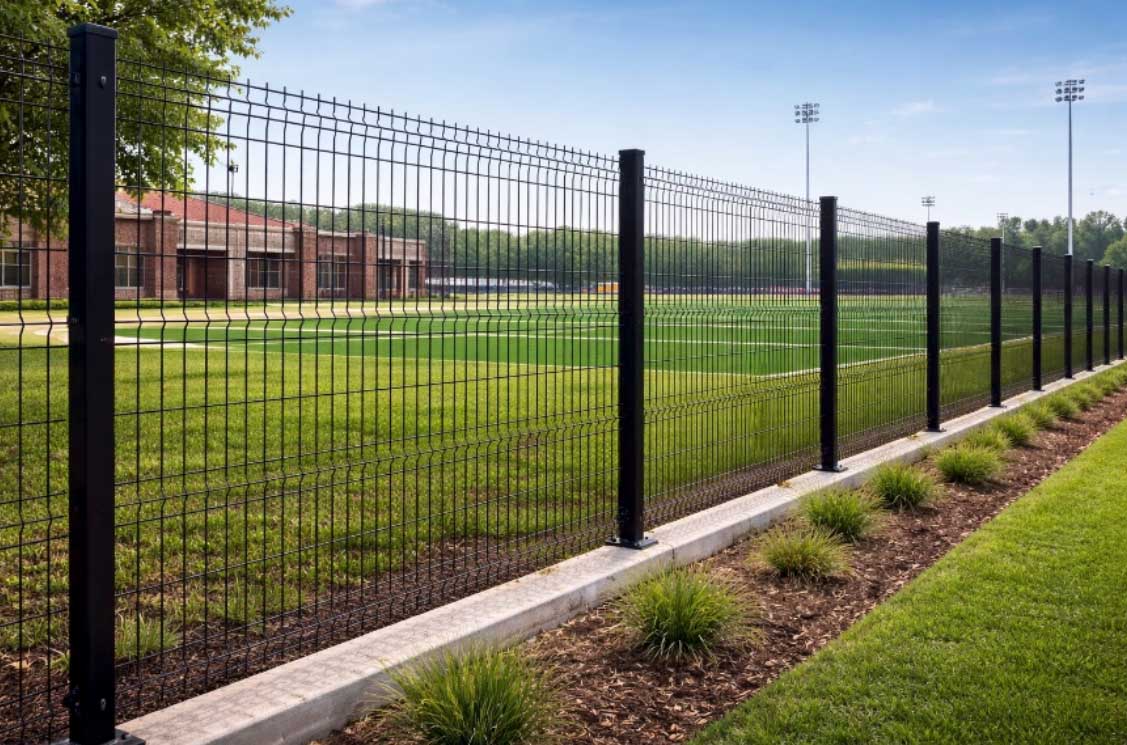
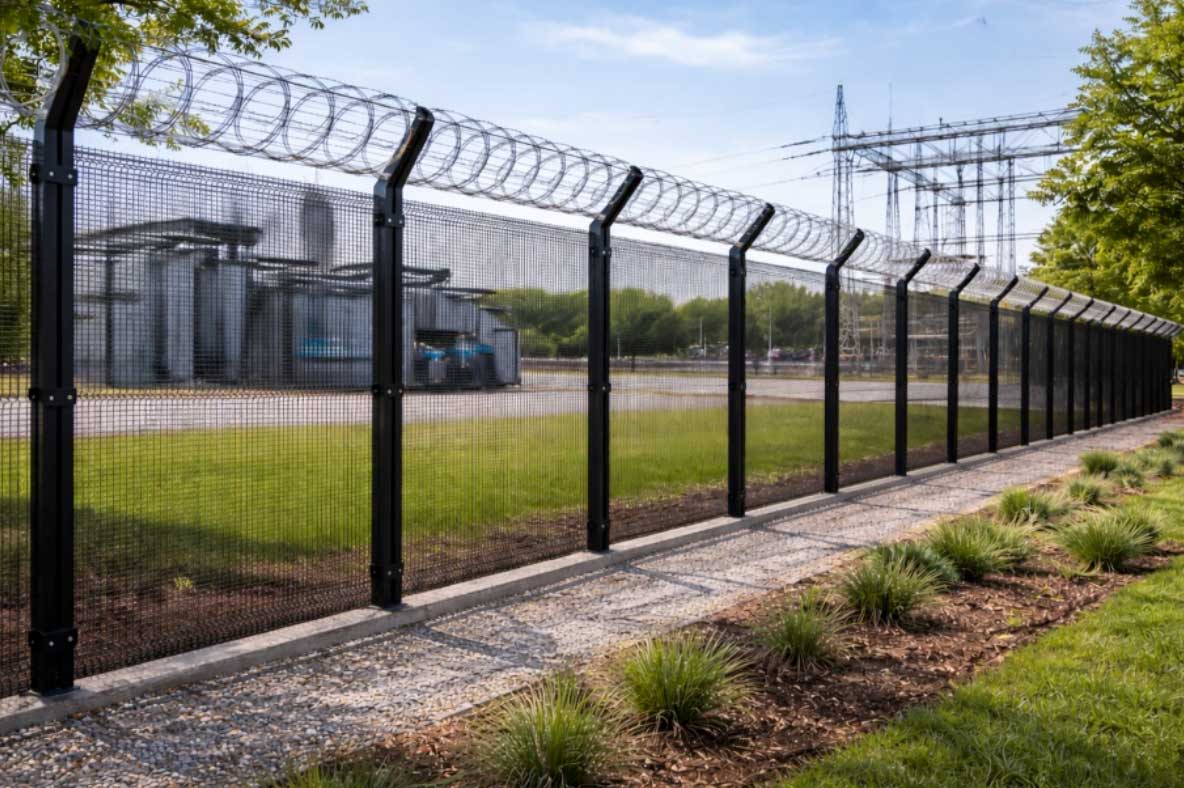
Anti-climb and anti-cut mesh systems are welded steel mesh panels engineered specifically to defeat two primary intrusion methods: climbing over the fence and cutting through the fabric. Unlike standard welded wire or chain link, these systems use small mesh openings (typically 76.2mm x 12.5mm / 3" x 1/2" or smaller), heavy-gauge wire (minimum 4mm / 6 ga), and rigid panel construction to deny hand and footholds for climbing and to resist bolt cutters, angle grinders, and reciprocating saws.
In public sector specifications, these systems appear under several product names — 358 mesh (the most common designation, referencing 3" x 0.5" opening), welded wire security mesh, anti-intruder mesh, and high-security panel fence. Each product has a specific performance test rating that the owner's security consultant or agency will reference in the specification. Understanding those ratings — and which product satisfies them — is the core competency that separates a qualified security fence subcontractor from a general fence contractor attempting to bid a security scope.
🔒 The 358 Designation — What It Means in Specifications '358 mesh' refers to the panel opening dimensions: 3 inches x 0.5 inches (76.2mm x 12.5mm). The third number — 8 — refers to the wire gauge in the original designation system. The 3" vertical opening prevents a bolt cutter jaw from fitting through to cut horizontal wires. The 0.5" horizontal opening prevents finger insertion for climbing. When a spec references '358 mesh,' 'anti-climb mesh,' or 'anti-intruder panel fence,' it is specifying this opening geometry — not a brand. We confirm the exact opening and wire gauge requirement from the spec section before bid day. Some high-security specifications further require formal attack-resistance testing ratings (LPS 1175, CPNI) — these are independent of the 358 designation and must be verified separately. |
|---|
Security Performance Standards & Rating Systems
THIS IS THE SECTION MOST FENCE CONTRACTORS CANNOT FILL IN. WE CAN.
Anti-climb and anti-cut mesh systems for public sector projects are specified against formal security performance standards. A PM reviewing these scopes needs to know which standard the spec references, what it means in performance terms, and whether the proposed system is certified to meet it. Here is the reference guide.
STANDARD | ORIGIN | WHAT IT TESTS | TYPICAL PUBLIC PROJECT REFERENCE |
|---|---|---|---|
ASTM F2453 | USA | Standard practice for metallic coated steel welded wire fence panels — dimensional and material performance | Baseline for all commercial anti-climb mesh in US public specs — correctional, utility, transit |
ASTM F2548 | USA | Expanded metal security fencing — anti-intruder performance for US federal and government applications | Federal facility perimeters, military support, SCIF perimeters, DOE/DOD adjacent projects |
LPS 1175 | UK/International | Independent attack-resistance testing — A through G ratings based on timed attack with defined tools | International projects, US federal projects requiring CPNI compliance, high-security government campuses |
CPNI (UK) | UK/International | Centre for the Protection of National Infrastructure — references LPS 1175 for security fence specification | Critical national infrastructure, water/energy utility perimeters on international or federal programs |
IEC 62443 | Industrial | Industrial cybersecurity + physical perimeter integration — for utility control perimeters | NERC-CIP compliant utility substation and water infrastructure perimeters |
ASTM A1064 | USA | Carbon steel wire for concrete reinforcement — applies to mesh wire specification in high-security panels | Material certification baseline referenced in anti-cut mesh submittals |
UL 2050 / 752 | USA | Ballistic-rated and monitored perimeter systems — applicable when integrated with detection and alarm systems | Federal facilities, courthouses, public safety facilities with integrated intrusion detection |
⚠ Critical for Bid Review: Security Standard ≠ Material Spec A specification may reference a security performance standard (LPS 1175 SR2, ASTM F2548) AND a material specification (ASTM F2453, wire gauge, opening size) simultaneously — and they are not the same requirement. A panel can be the correct material but not certified to the required attack-resistance rating. Conversely, a certified panel may not meet the dimensional requirements of the spec section. We review both dimensions of the specification before bid day — material compliance AND performance certification — and confirm that the proposed product satisfies both. This is the step that creates change order exposure when it is skipped. |
Technical Specifications
CSI DIVISION 32 31 26 — WIRE MESH FENCING | HIGH-SECURITY ANTI-CLIMB / ANTI-CUT GRADE
COMPONENT | SPECIFICATION |
|---|---|
CSI Reference | Division 32 31 26 — Wire Mesh Fencing (Anti-Climb / Anti-Cut Grade) |
Panel Type | Rigid welded steel wire mesh panel — anti-climb / anti-cut configuration (358 or per spec opening geometry) |
Standard Mesh Opening | 76.2mm x 12.5mm (3" x 0.5") — 358 anti-climb standard; alternate: 50mm x 50mm (2"x2") anti-cut grade |
Wire Diameter — Standard | 4mm (6 ga) horizontal and vertical wires — minimum for anti-cut classification |
Wire Diameter — Heavy | 5mm or 6mm for LPS 1175 SR3+ and CPNI-rated applications |
Wire Standard | ASTM A1064 / EN 10218-2 — cold-drawn carbon steel wire, Grade 60 minimum |
Weld Specification | Electric resistance weld at every intersection — weld shear strength minimum 50% of wire breaking load per ASTM F2453 |
Panel Height | 6', 8', 10', 12' standard — custom heights per security engineering |
Panel Width | 8' to 10' standard panel width — field-cut panels at terminations |
Post System | 3" or 4" OD Schedule 40 or Schedule 80 galvanized steel pipe — sized per panel height, wind zone, and security classification |
Post Embedment | PE-stamped concrete footing design — minimum 4' depth for 8' fence; depth per structural engineering for taller systems |
Post Spacing | 8' to 10' O.C. — matched to panel width to eliminate mid-span unsupported edges |
Panel-to-Post Attachment | Anti-tamper fixings — standard fasteners are not acceptable on security-rated installations; hex-head or proprietary anti-tamper bolts specified |
Topping Options | Flat top (flush cut, no protrusion), rotary spinning topper, razor ribbon / concertina wire, electric fence integration — per security tier |
Coating System | Class 3 hot-dip galvanized (ASTM A123) standard — PVC-coated over galvanized (RAL 6005 green, RAL 9005 black, RAL 8017 brown) for visual recessive profile |
Anti-Tamper Hardware | All panel-to-post fixings, base plate bolts, and gate hardware — proprietary or security-head fasteners per CPNI/LPS specification |
Standards | ASTM F2453, ASTM A1064, ASTM A123, LPS 1175 (where specified), CPNI (where specified), IBC wind load compliance |
Product Classification — Matching the System to the Specification
USE THIS TABLE DURING BID SCOPE REVIEW TO ALIGN THE PRODUCT WITH THE OWNER'S STATED SECURITY REQUIREMENT
SECURITY TIER | MESH / WIRE SPECIFICATION | PERFORMANCE RATING & TYPICAL PUBLIC APPLICATION |
|---|---|---|
Commercial Anti-Climb | 358 mesh, 4mm wire, Class 3 galvanized, flat top | ASTM F2453 baseline — school campuses (secure zones), transit utility areas, government parking structures, public safety facility perimeters |
Medium Security | 358 mesh, 4mm wire, PVC-coated, anti-tamper fixings, rotary topper | ASTM F2453 + anti-tamper hardware — correctional minimum security, water treatment perimeters, transit maintenance yards, municipal secure compounds |
High Security | 358 mesh, 5mm wire, anti-tamper fixings, razor ribbon or electric topper | LPS 1175 SR1/SR2 rated — correctional medium/close security, utility substations (NERC-CIP), government secure zones, military support facilities |
Maximum Security | 358 mesh, 6mm wire, double-skin panel option, full anti-tamper hardware | LPS 1175 SR3/SR4 — federal correctional, critical national infrastructure, DOE/DOD adjacent, SCIF perimeters |
Integrated Detection System | 358 mesh, 5mm or 6mm, vibration sensor integration, CCTV coordination | Monitored perimeter — combines mesh panel with intrusion detection cabling; federal facilities, high-value public infrastructure, courthouses |
🔧 Anti-Tamper Fixings — Why They Are Non-Negotiable on Security-Rated Projects Standard hex-head bolts can be removed with a common wrench in under 60 seconds. On a security-rated perimeter, this negates the attack resistance of the panel system entirely. Security specifications at medium tier and above require proprietary anti-tamper fixings — one-way screws, clutch-head bolts, or manufacturer-specific security fasteners that require a special tool to install and cannot be removed with standard equipment. We specify, source, and install the correct anti-tamper hardware for every security tier. Submittal documentation includes fastener type, tool key specification, and torque verification procedure. |
Topping Systems & Security Integration Options
The topping system is the second line of defense above the mesh panel and a critical component of the overall security specification. Selection is driven by the security tier, the owner's liability requirements, and — on occupied public sites — the public safety and visual impact constraints that agency design standards frequently impose.
TOPPING TYPE | SECURITY APPLICATION | PUBLIC FACILITY CONSIDERATIONS |
|---|---|---|
Flat / Flush Cut Top | Commercial anti-climb — lowest aggression profile | Required by some public agency design standards in visible civic locations — schools, transit stations. No protrusion above panel top rail. |
Outward Rotary Spinning Topper | Medium security — spinning cylinders deny grip | Common on correctional minimum security and utility perimeters. Mechanical deterrent, no cutting hazard. Maintenance-free. |
3-Strand Barbed Wire Extension | Medium security — standard deterrent arm | Standard on transit yards, public works facilities, school secure zones where razor ribbon is prohibited by design standards. |
Single Coil Concertina / Razor Ribbon | High security — ASTM F1664 barbed tape | Utility substations, correctional, government secure perimeters. Public visibility and liability review required before spec — not appropriate for publicly accessible areas. |
Double Coil Razor Ribbon | Maximum security — highest aggression profile | Federal correctional, critical infrastructure. Typically behind a secondary fence or in non-public-accessible zones. Safety signage required. |
Electric Fence Topper | High security — psychological and physical deterrent | Requires AEF (Animal Electric Fence) compliance documentation, public warning signage, and electrical sub coordination. Used on utility and government secure perimeters. |
Vibration / Intrusion Detection Cable | Monitored security — all tiers | Sensor cable woven into mesh panel or mounted on top rail — connects to CCTV/alarm control system. Requires early coordination with security system integrator and electrical sub. |
⚡ Electric Fence & Intrusion Detection — Coordination Requirements Electric fence toppers and intrusion detection cable systems require early coordination with your electrical subcontractor and the owner's security system integrator. We provide: conduit stub-out locations and sizing, energizer/panel mounting structural details, clearance dimensions for non-electrified zones, and warning sign mounting schedule. We do not install electrical or security system components. We ensure the civil and structural scope is complete and ready for your electrical sub and security integrator without rework or structural modifications. |
Where Anti-Climb & Anti-Cut Mesh Gets Specified in Public Projects
Anti-climb and anti-cut mesh is the specification standard for public facilities where a perimeter failure carries institutional, legal, or public safety consequences. These are the projects where the fence sub's competence directly affects the owner's liability exposure — and where a GC needs a subcontractor who has done this before.
FACILITY TYPE | TYPICAL ANTI-CLIMB / ANTI-CUT MESH SCOPE |
|---|---|
Correctional Facilities | Minimum to close-security perimeters — 358 mesh, rated products, razor ribbon or rotary topper; secondary perimeter and sally port gate systems; LPS 1175 compliance documentation where specified by state DOC. |
Water & Wastewater Utilities | Treatment plant perimeters, pump station enclosures, reservoir surrounds — NERC-adjacent or EPA-required physical security; ASTM F2453 baseline; anti-tamper hardware; IEC 62443 physical layer for SCADA-protected facilities. |
Electrical Substations | NERC CIP-006 physical security perimeter — 358 mesh, anti-tamper fixings, monitored access points; security plan documentation; intrusion detection integration coordination. |
Federal & State Government | Courthouse secure perimeters, government campus security zones, SCIF adjacent perimeters, law enforcement facility secure compounds — LPS 1175 or ASTM F2548 rated systems; full anti-tamper hardware; often GSA or DHS specification. |
Military Support Facilities | Non-classified perimeter security, base support facility surrounds, contractor access control zones — ASTM F2548 compliance; anti-tamper fixings; coordination with facility security officer documentation requirements. |
Transit Security Zones | Rail yard secure perimeters, bus maintenance facility enclosures, utility room and equipment access control — TSA-influenced security specs on federally funded transit projects; 358 mesh standard minimum. |
Public Safety Campuses | Police and fire stations, emergency operations centers, communications facility perimeters — commercial to medium security tier; anti-tamper fixings; often paired with access control gate systems. |
Critical Communications | Broadcast tower sites, cell carrier facilities, emergency communications infrastructure — utility-grade anti-cut mesh; anti-tamper hardware; no topping (FAA height restrictions common). |
Compliance & Documentation
CSI 32 31 26 | THE MOST DEMANDING SUBMITTAL PACKAGE IN THE FENCE INDUSTRY — WE BUILD IT RIGHT THE FIRST TIME
Anti-climb and anti-cut mesh projects carry the most complex submittal requirements of any fence system. Security performance certifications, anti-tamper hardware documentation, PE-stamped structural calculations, and — on federal or LPS-rated projects — third-party test certificates must all be organized and submitted in a format the A&E team and the owner's security consultant can review and approve. This is where unqualified fence subs create weeks of delay.
Pre-Construction Submittals
| During Construction
Project Closeout Package
|
🔑 Anti-Tamper Key Chain-of-Custody — A Closeout Requirement Most Subs Miss Proprietary anti-tamper fastener systems use installation tools that must be transferred to the owner at project closeout — with documented chain-of-custody to prevent unauthorized panel removal. This is a formal closeout requirement on security-rated projects. We document the key set transfer in writing, include it in the closeout package, and obtain a signed receipt from the owner's facility security manager. If this step is missed at closeout, the owner's security consultant will flag it during the final security inspection — creating a punch list item that delays substantial completion. |
Installation on Active Security Sites
Anti-climb and anti-cut mesh installations on operating security facilities — correctional campuses, federal buildings, utility sites — are among the most coordination-intensive fence scopes in public construction. Continuity of the security perimeter during construction is not optional. It is a contractual and often legally mandated requirement.
Perimeter Security Continuity Planning Before mobilization, we develop a written Perimeter Security Continuity Plan in coordination with your superintendent and the owner's facility security officer. This plan documents the removal and reinstallation sequence, temporary security bridging methods, required staffing during open perimeter windows, and the maximum permitted open-perimeter duration per section — typically measured in hours, not days. Phased Removal & Reinstallation On occupied correctional, federal, and utility sites, we execute fence replacement in short, tightly managed phases — removing existing fence, installing new posts and panels, and restoring security continuity before moving to the next section. No section of perimeter is left open overnight without owner-approved temporary security measures in place. Anti-Tamper Hardware Installation Protocol Anti-tamper fastener installation requires a documented torque verification step for every fixing point. Our crews are trained on the specific installation tool and torque requirement for the specified fastener system. Torque logs are maintained in real time and submitted as part of the construction documentation record. | Coordination with Security System Integrators On projects with intrusion detection, CCTV, or electric fence integration, we coordinate our installation sequence with the security system integrator's schedule. Conduit stub-outs, sensor cable routing paths, and energizer mounting structures are completed in coordination with your electrical sub before security system installation begins. Facility Security Officer Requirements Federal and correctional projects typically require all field personnel to undergo background screening and comply with facility access protocols before mobilization. We initiate the screening process immediately upon award — not at mobilization — to avoid schedule delays caused by personnel clearance processing. Davis-Bacon & Prevailing Wage All applicable projects executed in full prevailing wage compliance. Certified payroll records maintained and submitted on your required schedule. On federal projects, we comply with all applicable FAR labor standards requirements. |
Warranty Coverage
All warranties provided in written form as part of the project closeout package, transferable to the project owner upon substantial completion. On LPS-rated or federal-specification projects, warranty documentation is supplemented by the manufacturer's certificate of installation compliance.
COVERAGE | DURATION |
|---|---|
Workmanship (Labor) | 2 Years |
Mesh Panel — Structural Integrity | 10 Years Material Defect |
Class 3 Galvanized Coating — Mesh & Posts | 10 Years Corrosion Protection |
PVC Coating over Galvanized | 5 Years Color Retention & Adhesion |
Anti-Tamper Hardware | 5 Years — Mechanical Function & Corrosion |
Weld Integrity — Panel Intersections | 10 Years per ASTM F2453 weld shear standard |
Gate Hardware — Manual | 2 Years Parts & Labor |
Gate Operators — Automated | 1 Year Parts & Labor + Manufacturer Warranty (typically 3–5 years) |
LPS 1175 / CPNI Rated Products | Per manufacturer certificate — typically 10 years structural; rating validity per certification body |
Working With Us — Subcontract Process
Security mesh projects require more pre-construction coordination than any other fence system. The earlier you bring us in, the more value we add — particularly in confirming product certification compliance and coordinating security personnel screening before mobilization.
01 | BID PHASE Send us the fence spec section (CSI 32 31 26 or equivalent), security performance standard referenced (ASTM F2453, LPS 1175, ASTM F2548), site plan, and bid date. We confirm product certification compliance, anti-tamper hardware requirements, and topping specification — and return a complete scope letter and hard bid within 3 business days. We flag certification gaps and scope ambiguities before bid day. |
02 | AWARD & PRE-CONSTRUCTION Upon award, we immediately initiate: personnel background screening for facility access, product certification verification with the manufacturer, and submittal package preparation. COI provided within 24 hours. On federal projects, we begin FAR compliance documentation on day one. |
03 | SUBMITTALS Full submittal package delivered within 15 business days of NTP — mill certs, LPS/ASTM certification documents, PE-stamped structural calcs, anti-tamper hardware specs, shop drawings, and Perimeter Security Continuity Plan. Organized to CSI 32 31 26 and the project's security spec format. |
04 | PHASED INSTALLATION Installation executed per the approved Perimeter Security Continuity Plan. Anti-tamper torque logs maintained in real time. Progress photos documented by phase. Security system integration coordination executed per agreed schedule with electrical sub and integrator. |
05 | CLOSEOUT Complete closeout package — as-builts, LPS/ASTM compliance certificates, warranties, anti-tamper key set with chain-of-custody documentation, maintenance guide, gate O&M manuals, lien releases — delivered within 5 business days of substantial completion. |
Frequently Asked Questions — For Project Managers
Q: The spec references LPS 1175 SR2 — what does that mean and how do we confirm the product meets it? A: LPS 1175 is a UK-based international standard for security fencing that rates products by their resistance to timed attack with defined tools — SR1 through SR6, with SR1 being lowest. SR2 means the product must resist attack for a defined period using tools up to and including battery-powered angle grinders. Compliance is verified by a third-party test certificate issued by a UKAS-accredited test lab — not a manufacturer self-certification. We provide the test certificate in the submittal package and can coordinate with the manufacturer's technical team to support A&E review if needed. |
Q: How do you handle perimeter security continuity on an operating correctional facility? A: It starts before mobilization. We develop a written Perimeter Security Continuity Plan with your superintendent and the facility's security officer — documenting the maximum open-perimeter window per phase (typically 2–4 hours), temporary security staffing requirements during open windows, the installation sequence by section, and the communication protocol between our field supervisor and the facility control room. Nothing opens until the plan is approved. No section stays open past the agreed window. |
Q: What background screening do your crews need for federal or correctional projects? A: It depends on the facility. Federal correctional projects typically require NCIC background checks and facility-specific badging. State DOC projects have their own screening protocols. Military support facilities may require CAC-equivalent visitor processing. We initiate the screening process immediately upon award — not at mobilization. Processing time is built into our pre-construction schedule so it doesn't delay your NTP-to-mobilization timeline. |
Q: Can you integrate with the project's intrusion detection or CCTV system? A: Yes — through coordination, not installation. We provide conduit stub-outs, sensor cable routing paths and clearance dimensions, vibration sensor mounting details, and energizer/panel structural mounting for electric fence toppers. We produce a coordination drawing that documents all civil and structural requirements for your electrical sub and the security system integrator before rough-in. We do not install electrical or security electronics, but we ensure the structural scope is correct so they can complete their work without modifications. |
Q: How do anti-tamper fixings work and who has the key at the end of the project? A: Anti-tamper fixings are proprietary fasteners that can only be installed and removed with a specific tool — not available in standard tool inventories. We install every fixing with the manufacturer's tool and verify torque per the specified schedule, logging each fixing point. At closeout, the installation tool set is transferred to the owner's designated facility security manager with a written chain-of-custody document — signed by our superintendent, your PM, and the owner's representative. This is a formal closeout deliverable, not an afterthought. |
Download Our Anti-Climb & Anti-Cut Mesh Systems Catalog
Our Anti-Climb & Anti-Cut Mesh Catalog includes the full product classification matrix, security standard reference guide, mesh opening and wire gauge specifications, anti-tamper hardware schedule, topping system options, PE-stamped structural reference details, and submittal-ready product data sheets — everything your estimating and project management team needs to scope, bid, and execute security mesh projects with confidence.
📄 Anti-Climb & Anti-Cut Mesh Catalog Includes:
| 📋 Capabilities Statement Includes:
|

FENCING SYSTEMS